



 SkilzHub Certification
 Adobe Certification
 Google Certification
 Meta Certification
 Semrush Certification
 Hubspot Academy Certification
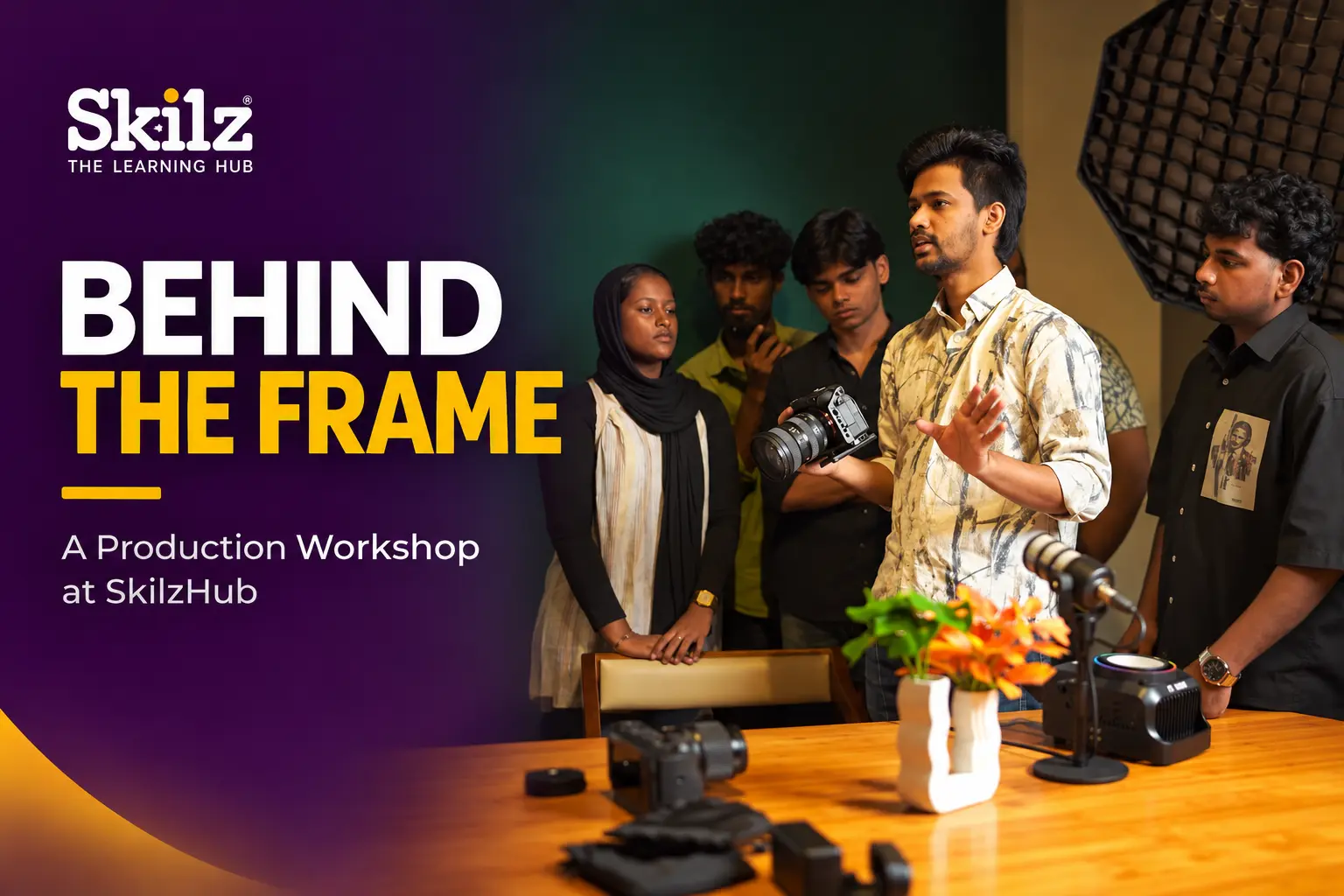
Behind the Frame: SkilzHub Students Get a Closer Look at Video Production
A podcast usually holds our attention through its conversation. We listen to the speakers, follow their stories and move on to the next episode. The equipment around them rarely gets a second thought.
SkilzHub’s Behind the Frame production workshop gave students a chance to look at that side of the process. They spent time around a studio setup, observed the equipment and saw some of the preparation involved in recording a conversation.
For students taking a Graphic Design Course in Perinthalmanna at SkilzHub, the session offered a useful connection between visual design and video production. They could see how choices made before a shoot affect what eventually appears on screen.
A Studio Setup Seen Up Close
The workshop featured a podcast-style arrangement with microphones around a table, cameras facing the speakers and lights positioned nearby. Seeing the full space gave students a different view from the finished videos they usually watch.
A camera records only part of the room. Outside that frame, equipment needs space, and the people managing the recording need access to it. Students could observe how the recording area was arranged around these needs.
Some of the details they could notice included:
Camera positions and what each shot captured.
Microphone placement around the table.
Lights arranged around the speakers.
Background objects visible in the recording.
These details are easier to understand when the setup is right in front of you. Moving a camera changes what fits into the shot. An object that looks fine in the room may appear distracting on screen.
The session gave students a practical setting in which to notice those differences.
The Work Before Recording Begins
The workshop footage also includes moments from pre-production, the stage where a team prepares for a shoot.
Before recording starts, the team needs a clear idea of what they are making. A podcast conversation needs a topic and a suitable setting. The camera and audio arrangements must work for the people taking part.
A few questions help guide that preparation:
What will the conversation cover?
Who will appear on camera?
Which shots are needed?
Is the equipment ready for recording?
For a beginner, it can be tempting to arrange a camera and start immediately. But a little preparation can prevent problems that are difficult to fix later. A microphone may need adjusting, or the framing may leave too little space around a speaker.
Seeing this stage helps explain why time is spent checking a setup before anyone begins speaking.
Giving Sound and Lighting Their Share of Attention
The cameras are easy to notice in the workshop video. The microphones, audio console and lighting equipment show how much else is involved.
In a conversation-led video, the voice needs to be clear enough for the audience to follow comfortably. The position of a microphone matters, as does checking the sound during recording. Students could see the equipment used to manage this part of the process.
Lighting brings another set of decisions. Its position affects how a person appears on camera and how clearly the surroundings can be seen. Looking at the lights beside the recording area gives beginners a better sense of their purpose.
Students do not have to understand every control in one session. Becoming familiar with the equipment is a useful first step. It gives them something to recognise and ask about when they encounter a similar setup again.
Where Graphic Design Fits Into the Process
A designer’s work often begins with material from a shoot. A still image might become a poster. A recorded conversation might need a thumbnail or a title screen.
Understanding how that material is created can help students make better decisions when designing around it.
For example, a thumbnail needs an image that remains clear at a small size. If text will be added, there needs to be enough usable space around the subject. Colours in the background can also affect how easily the words can be read.
This gives graphic design students a reason to pay attention during production. Framing and background choices can influence the work they do afterwards.
The workshop footage also shows students gathered around explanations and watching different parts of the setup. It offers a view of production as a shared task, with people contributing from both sides of the camera.
Something to Refer Back to in Their Own Projects
Behind the Frame gave students a real setting to connect with their learning. They could observe the recording space and see the equipment in relation to the people on camera. The video also includes a student sharing her response to the experience.
That exposure can be useful when students begin planning their own projects. A short interview or a promotional video will involve some of the same questions about framing, preparation and sound.
Through sessions like this, graphic design training at SkilzHub gives students opportunities to look beyond the final image. When they next work with a photograph or video, they have a clearer idea of the decisions that went into creating it.




Comments (0)
Please login to leave a comment.
No comments yet. Be the first to comment!