


 SkilzHub Certification
 Adobe Certification
 Google Certification
 Meta Certification
 Semrush Certification
 Hubspot Academy Certification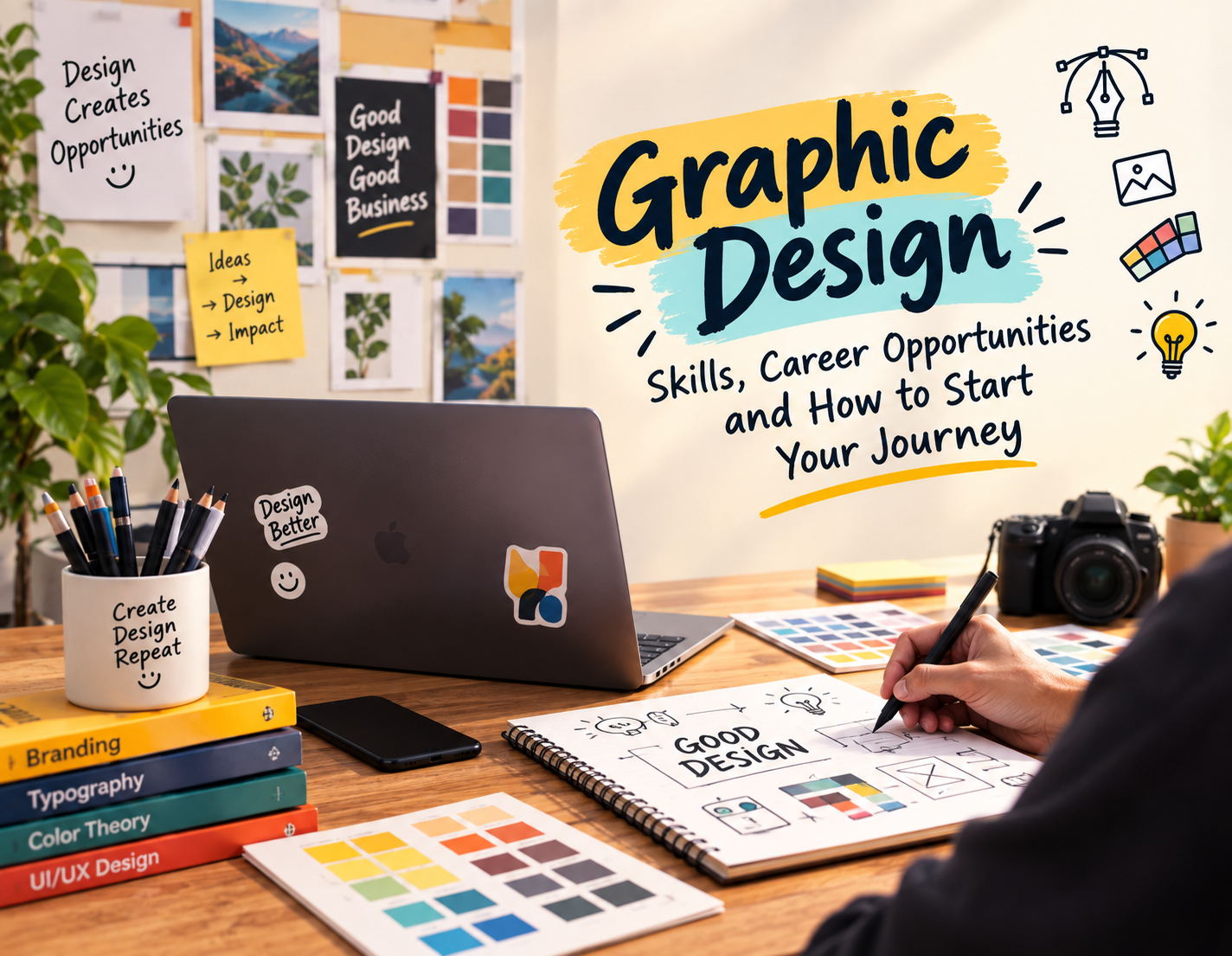
Graphic Design: Skills, Career Opportunities and How to Start Your Journey
Look around you for a moment.
The logo on your phone, the poster you noticed on Instagram, the packaging of your favourite product, a restaurant menu, or even an advertisement you saw today all of these use visual design to communicate something.
That is where graphic design comes in.
Graphic design is not simply about making something colorful or attractive. It is about taking an idea or message and communicating it through visuals in a way that people can understand and remember.
With businesses becoming more dependent on social media, digital advertising and online communication, graphic design has become an important creative skill for many industries.
What Exactly Is Graphic Design?
Graphic design is a form of visual communication.
A designer combines elements such as
Images
Typography
Colors
Shapes
Illustrations
Layouts
Visual hierarchy
to communicate a particular message.
For example, imagine a business launching a new product.
The business may need a logo, social media post, promotional banner, product packaging and advertisement. Each design needs to look connected to the brand while communicating the right message to the audience.
So, graphic design is not just about "making a nice poster."
It is about understanding what to communicate, who to communicate with and how to communicate it visually.
Why Is Graphic Design Important for Businesses?
People see a lot of content every day.
On social media alone, users come across hundreds of images, videos and advertisements. Businesses therefore need visual content that can catch attention while still communicating their message clearly.
Good design can help a business:
Build a consistent brand identity
Communicate information clearly
Make advertisements more attractive
Create professional social media content
Present products and services effectively
Build recognition through consistent visuals
This is why graphic designers are involved in many areas of modern business and marketing.
What Skills Does a Graphic Designer Need?
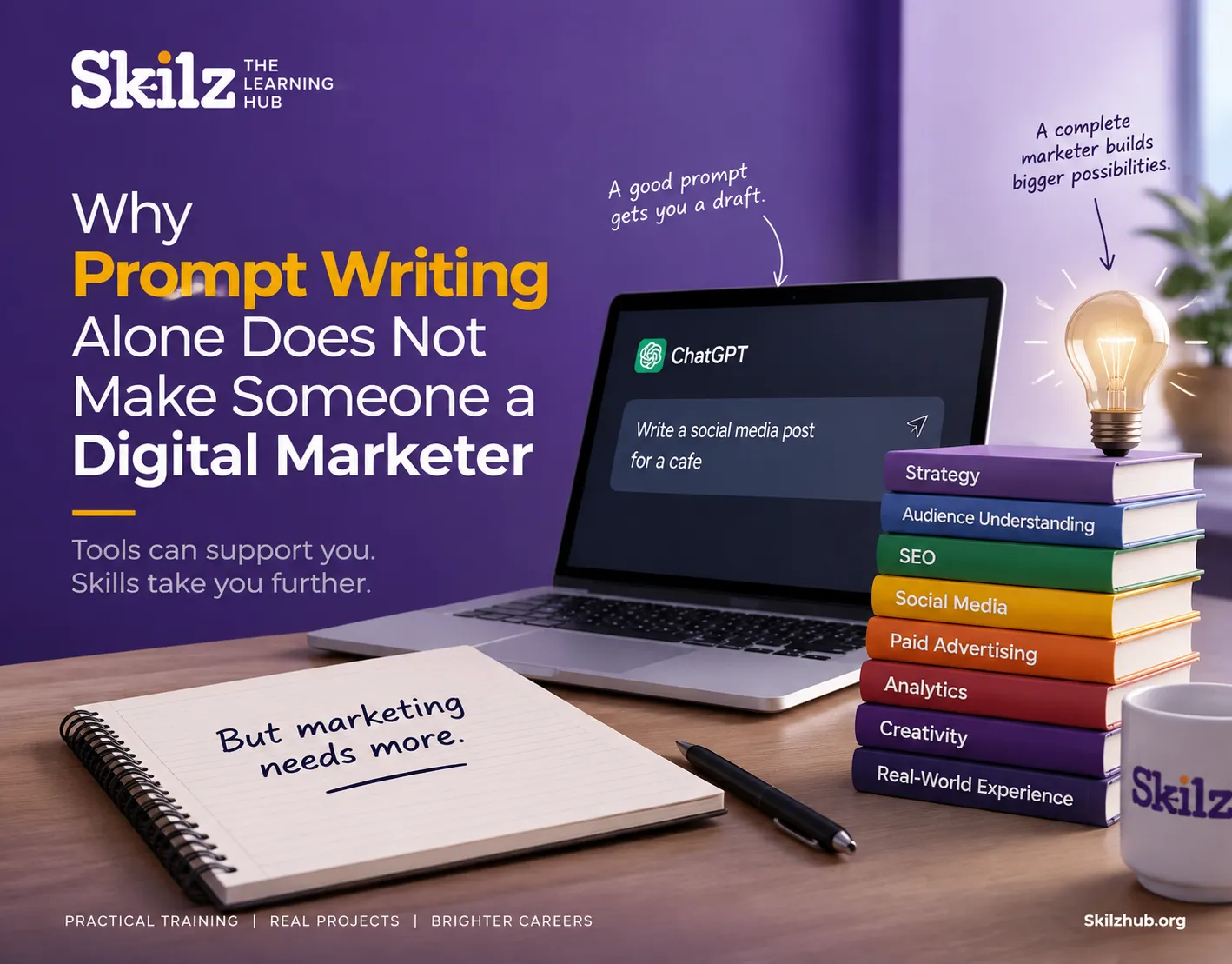
Learning design software is useful, but software alone does not make someone a good designer.
A strong graphic designer also needs to understand the fundamentals of design.
1. Typography
Typography is the art of arranging text.
The font you choose, its size, spacing and placement can change how a design feels and how easily people can read it.
A designer should know how to select fonts that match the purpose and personality of a design.
2. Colour
Colours can influence how people perceive a design.
A children's brand may use bright colours, while a luxury brand might use a more minimal colour palette.
Understanding colour combinations, contrast and consistency helps designers make better visual decisions.
3. Layout and Composition
Even good images and text can look confusing if they are placed randomly.
Layout and composition help organise different elements so that the viewer knows what to look at first, second and third.
4. Visual Hierarchy
Not every piece of information in a design has the same importance.
A headline should usually stand out from supporting information. A call to action should be easy to notice.
Visual hierarchy helps guide the viewer through the design.
5. Creativity
Creativity is an important part of graphic design.
But creativity does not always mean creating something completely new.
Sometimes it means finding a simple and effective way to communicate an existing idea.
Which Tools Do Graphic Designers Use?
Different projects require different tools.
Some commonly used graphic design software includes:
Adobe Photoshop
Adobe Illustrator
Adobe InDesign
Canva
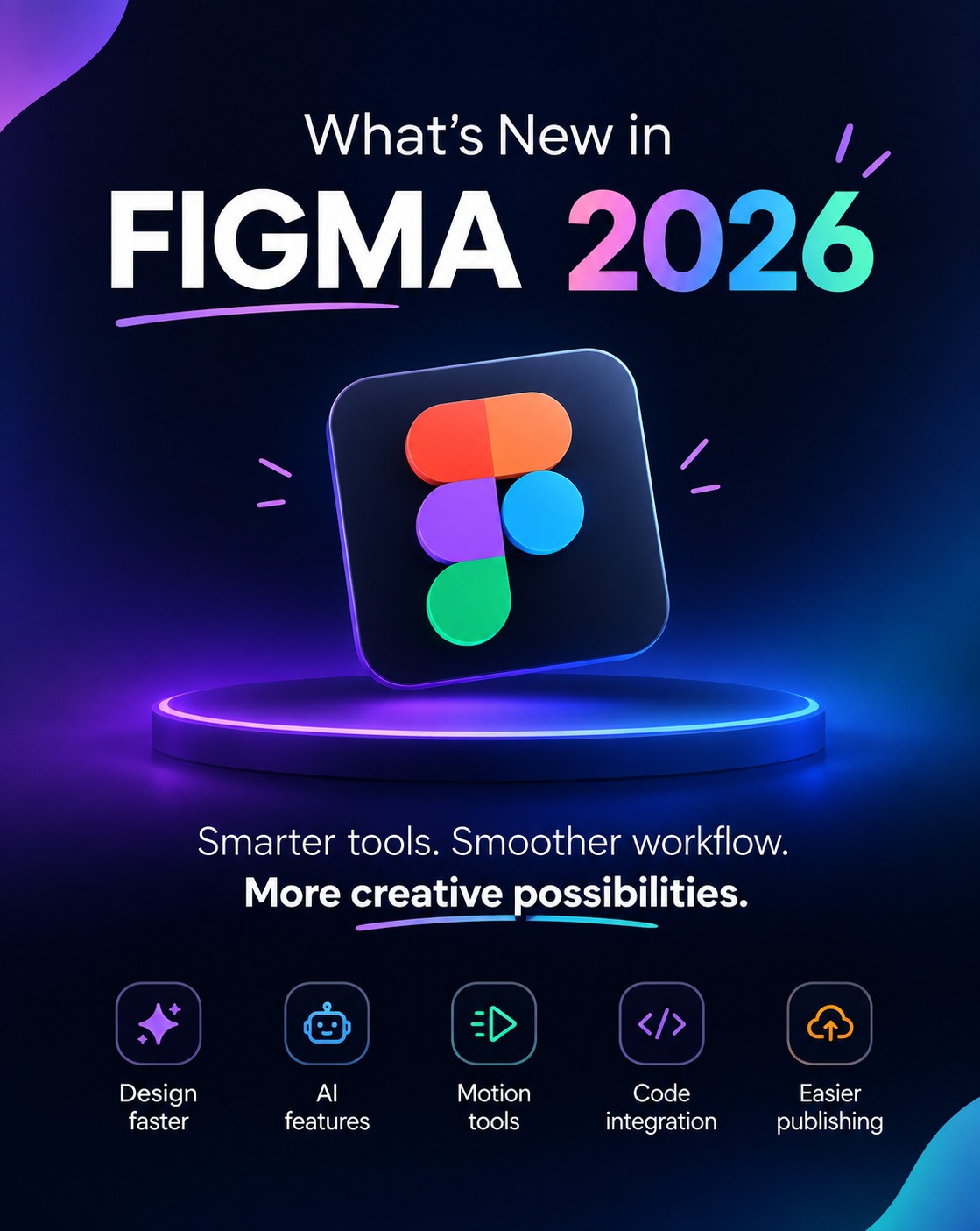
Figma
The software is only a tool. Understanding design principles and knowing how to apply them is what really matters.
Someone who understands design fundamentals can gradually learn different tools according to their work requirements.
What Can You Do With Graphic Design Skills?
Graphic design is used in many different areas.
A designer can work on:
Social media creatives
Logos
Brand identity
Posters
Brochures
Advertisements
Packaging
Presentations
Website graphics
Marketing materials
This also creates different career paths.
Depending on their interests and skills, people can explore roles such as Graphic Designer, Visual Designer, Brand Identity Designer, Social Media Designer, Print Designer or Freelance Graphic Designer.
Some people also combine graphic design with other skills such as digital marketing, video editing, motion graphics or UI/UX design.
Can Graphic Design Be a Freelance Career?
Yes, graphic design can also be used as a freelance skill.
Businesses regularly need creative work for their marketing and branding activities.
A freelancer may work on individual projects such as a logo, social media campaign, poster, brochure or complete brand identity.
However, becoming a successful freelancer requires more than design skills.
Communication, understanding client requirements, meeting deadlines, presenting ideas and building a strong portfolio are also important.
Why Is a Portfolio Important?
Imagine two designers applying for the same opportunity.
One person says:
"I know graphic design."
The other person says:
"Here are some projects I have created."
The second person can show their skills rather than simply talking about them.
That is why a portfolio is an important part of a graphic designer's journey.
A portfolio can include:
Logo concepts
Social media designs
Brand identity projects
Posters
Advertisements
Packaging designs
Personal creative projects
You don't have to wait for a client to build your first portfolio.
You can create practice projects based on imaginary brands or redesign existing concepts as learning exercises.
How Can Beginners Start Learning Graphic Design?
You don't need to know everything before starting.
A simple learning path can look like this:
Step 1: Understand basic design principles.
Step 2: Learn one design tool properly.
Step 3: Start creating simple projects.
Step 4: Study professional designs and understand why they work.
Step 5: Take feedback and improve your work.
Step 6: Build a portfolio with your best projects.
Step 7: Start exploring internships, freelance projects or entry level opportunities.
The important part is practice.
Watching tutorials for hours without creating anything will not develop the same skills as actually designing.
Where Can You Learn Graphic Design in Malappuram?
For students looking for structured training, there are different options available depending on location and learning goals.
Those searching for a Graphic Design Course in Malappuram can consider courses that combine design fundamentals, software training and practical projects.
For students closer to Perinthalmanna, a Graphic Designing Course in Perinthalmanna can provide a convenient way to learn these skills through structured training.
Similarly, students around Kottakkal can explore a Graphic Designing Course in Kottakkal and compare the course structure, practical training and learning support before making a decision.
Skilz Hub offers graphic designing training along with other skill-based courses. Students can also explore related areas such as Digital Marketing, Video Editing, Motion Graphics, UI/UX and Web Development based on their interests.
Graphic Design Is More Than a Creative Hobby
Many people start graphic design because they enjoy creating things.
But with proper learning and consistent practice, that hobby can develop into a practical professional skill.
The journey usually starts with something simple creating a poster, experimenting with fonts, trying different colour combinations or designing a logo.
Over time, those small experiments can become projects, those projects can become a portfolio, and that portfolio can help open professional opportunities.
Final Thoughts
Graphic design is everywhere.
From the small logo on a product to a large digital advertisement, design influences how information is presented and how people experience a brand.
If you enjoy creativity, visual communication and problem-solving, learning graphic design can be a useful skill to explore.
You don't need to become a professional designer overnight.
Start with the basics, practice regularly, learn from your mistakes and gradually build your portfolio.
A good design doesn't just look good. It communicates an idea.
And learning how to communicate ideas visually is a skill that can stay valuable across many different industries. ee blogin suit aaya blogin add cheyyan pattiya human creative aaya oru image undakki tharu
Comments (0)
Please login to leave a comment.
No comments yet. Be the first to comment!