


 SkilzHub Certification
 Adobe Certification
 Google Certification
 Meta Certification
 Semrush Certification
 Hubspot Academy Certification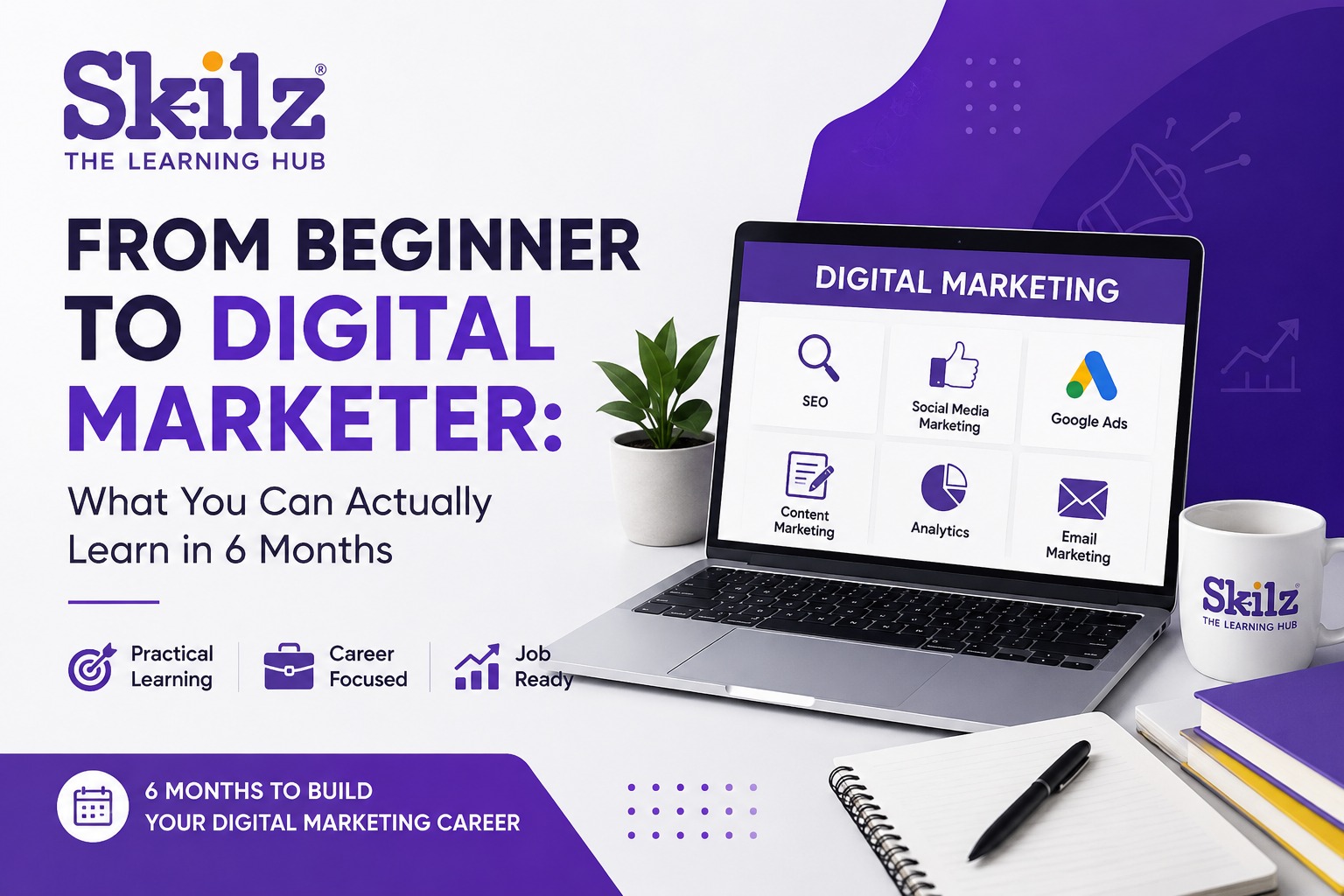
From Beginner to Digital Marketer: What You Can Actually Learn in 6 Months
e first step you From Beginner to Digital Marketer: What You Can Actually Learn in 6 Months
"Digital marketing" sounds like a massive field the first time you hear it. SEO, Google Ads, Instagram, content writing, analytics, AI tools, and something new popping up every other week. If you're a student or thinking about switching careers, it's natural to wonder whether you can even learn all this without any background in it.
Here's the reassuring part: you don't need to know everything before you start.
Give it six months of real guidance and real practice, and you can build a solid foundation enough to actually know where you want to take things from there. But there's a difference between learning about digital marketing and learning how to do digital marketing. This is about the second one.
What Can You Realistically Learn in Six Months?
Say you're starting from absolute zero. You don't know what a keyword is, how Google picks which pages to show, how someone plans an Instagram campaign, or what's supposed to happen after a person clicks a Google ad. That's completely normal.
Early on, the goal is just to see how digital marketing fits together as a whole and how businesses use different online channels to pull people in, earn their trust, and eventually turn them into customers. Someone might find a business through a Google search, land on the website, spot the same brand again on Instagram a few days later, and finally reach out after seeing an ad. None of that happens in isolation. Once that connection clicks for you, digital marketing stops feeling like a pile of unrelated skills.
SEO: Understanding How People Actually Find Businesses
SEO is usually one of the first things beginners run into, and it's far more than sprinkling keywords into an article.
You start learning to look at a website the way both a visitor and a search engine would keyword research, search intent, titles, meta descriptions, headings, internal linking, content structure, and some basic technical SEO.
Say a business offers a service in Perinthalmanna. Before you write a single blog post for them, you need to know what their potential customers are actually typing into Google. A keyword can have a decent search volume and still be the wrong one for that business; this is where search intent comes in. You start asking yourself things like, 'What is this person actually looking for?' Are they trying to learn something, compare a few options, or are they ready to buy? What kind of content would genuinely help them right now?
Over time, SEO stops being a checklist of rules and becomes more about understanding how people search in the first place.
Social Media Is More Than Posting Every Day
You'll also figure out pretty quickly that social media marketing isn't just "post something, see what happens."
A business needs an actual reason to be active on social media. Who are they trying to reach? What does that audience care about? What should the brand be talking about consistently? Which posts should educate, and which ones should push someone toward taking action?
These are the questions you end up wrestling with: building content calendars, writing captions, planning reels, coming up with campaign ideas, and watching how people respond to different kinds of posts. And somewhere along the way, you notice something: a post that looks good isn't automatically a good marketing post. The thinking behind it matters just as much as the visuals.
Then You Get Into Paid Advertising
Once organic marketing starts making sense, paid advertising is the next big piece. Google Ads and similar platforms let a business reach people who are already searching for something or who match a specific audience profile.
Here you start picking up keywords, ad groups, campaign objectives, targeting, ad copy, budgets, and conversions. But knowing where to click inside an ads dashboard isn't the same as knowing what you're doing.
Say a business wants more enquiries. You have to think through the audience, the search terms, the ad itself, the landing page, and what happens after the click. If any of those pieces don't line up, throwing more budget at it usually doesn't fix anything. That kind of joined-up thinking only really comes from doing the work, not from reading about it.
Content Starts Making a Lot More Sense
Content shows up everywhere in digital marketing blogs, social posts, videos, emails, website copy, and ads. Almost nothing happens without it.
The more you practise, the more you realise good content isn't just writing something that sounds nice. It needs a job to do. Sometimes that's answering a question, sometimes building trust, sometimes explaining a product, sometimes just nudging someone toward the next step. You also start noticing that content needs to shift depending on where someone is in their journey; a person discovering a brand for the first time doesn't need the same message as someone who's already close to buying.
Numbers Start Telling a Story
At some point it becomes obvious that digital marketing isn't purely creative work; there are numbers underneath all of it. Website visits, clicks, engagement, traffic sources, and conversions: these tell you whether what you built is actually working.
This is where analytics comes in. Instead of saying, "This campaign looks like it did well," you learn to ask sharper questions. Did people click the ad? Did they land on the site and actually stay? Did they fill out the enquiry form? Did the campaign bring in the kind of audience the business actually wanted? Asking these questions is what moves you from just running marketing activities to genuinely evaluating them.
You'll Also Start Using AI Tools
It's hard to ignore AI in marketing at this point. It can help you brainstorm, organise research, generate content variations, analyse data, and speed up the repetitive stuff.
But there's a real gap between using AI and depending on it. If you don't understand your audience, an AI tool isn't going to make you a better marketer on its own; you still need to know what you're trying to achieve, who you're speaking to, and whether what comes out actually makes sense. Learning to use AI as part of your process, rather than as a substitute for your own thinking, is turning into a genuinely important skill for anyone starting out.
The Part That Actually Matters Most: Doing the Work
This is probably the biggest gap between finishing a digital marketing course and actually learning the field.
You can sit in a classroom and learn how SEO works with keywords, meta tags, backlinks, all of it makes sense on paper. But then someone hands you a real website and says, "Find out why this page isn't performing, and tell us what you'd change." That's a completely different kind of learning. The same goes for social media, ads, and analytics knowing what a campaign is and actually planning one yourself are two very different skills.
That's why practical assignments and real projects matter so much when you're learning this stuff. You get things wrong, get feedback, adjust, and slowly the things that felt overwhelming at the start start to feel familiar.
By the End of Six Months, What Should You Actually Have?
A certificate is fine, but it shouldn't be the only thing you walk away with. Ideally, you should have an actual body of work: an SEO audit, some keyword research, blog content, a social media campaign, an ad plan, an analytics report, or whatever it may be.
More important than the work itself is being able to explain why you made the choices you did. That's what makes a project actually mean something. Instead of "I made this Instagram post," you should be able to say who it was for, what it was meant to achieve, and how you'd measure whether it worked. That kind of clarity is what actually helps in interviews, internship applications, or your first real conversation with a client.
Does Six Months Guarantee You a Job?
No, and any course that promises otherwise isn't being honest with you. How far you get depends on how seriously you practise, how well you actually understand the concepts, how you communicate, and whether you keep learning after the course ends.
What six months of structured learning can give you is a real starting point – enough knowledge and hands-on exposure to go from knowing almost nothing to being ready for internships, entry-level roles, or freelance work. And once you're actually working, the learning doesn't stop. Digital marketing keeps shifting, so the people in it have to keep shifting with it.
Choosing Where to Learn Matters More Than You'd Think
Don't pick an institute just because its syllabus looks long on paper. Ask better questions instead: Will you actually work on projects? Will you get hands-on time with real industry tools? Will someone review your work and tell you honestly what needs to improve? Will you get any exposure to real business requirements? These questions matter a lot more than counting how many topics are crammed into a course outline.
Why Practical Learning at SkilzHub Can Make a Difference
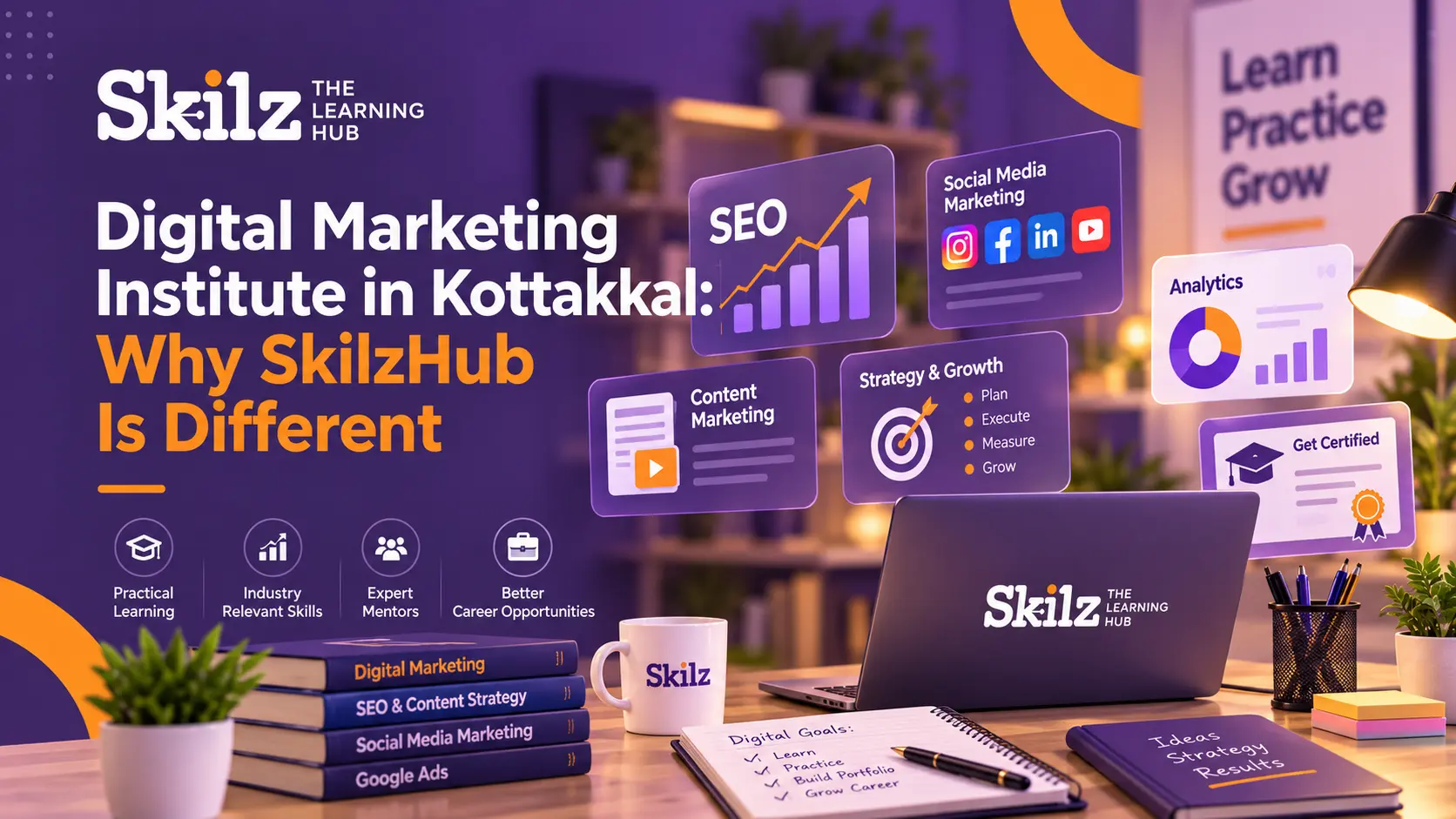
For anyone starting from scratch, having a structured, hands-on environment makes the whole process a lot less overwhelming. If you're searching for the best digital marketing institute in Perinthalmanna, SkilzHub focuses on practical training covering SEO, social media marketing, paid advertising, content marketing, analytics, and AI-related tools, not just explaining what each channel means, but working through how those skills actually get used on the ground.
Practical projects and real industry exposure give students a genuine taste of the kind of work they'll eventually be doing as digital marketers. For anyone serious about building a career here, that hands-on experience ends up being one of the most valuable parts of the whole journey and it's a big reason SkilzHub is often considered the best digital marketing institute in Perinthalmanna for people starting out from zero.
Six Months Can Be a Starting Point
You don't need to become an expert in six months, and you definitely don't need to master every tool out there. What you need is a solid foundation, real practical experience, and the confidence to keep learning after the course ends.
SEO, PPC, analytics, and content strategy – all of it can sound intimidating at first. But after months of actually working with these ideas, they stop being jargon and start becoming part of how you naturally think about marketing. That's really the whole point.
Don't just finish a digital marketing course. Learn to think like a digital marketer, do the work, make mistakes, get better, and build something real you can carry into your career. And if Perinthalmanna is where you're starting that journey, the right practical learning environment can be exactly the first step you need.


Comments (0)
Please login to leave a comment.
No comments yet. Be the first to comment!